

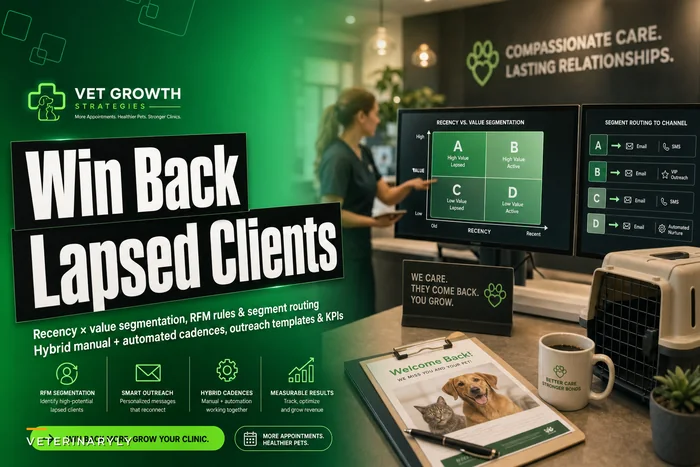
Win Back Lapsed Clients with a Structured Follow-Up Workflow
Segmentation‑then‑action playbook: recency/value rules, automated + manual cadence, provider outreach templates and conversion KPIs with sample cadence tables.

Actionable veterinary clinic management tips, best practices for patient care, appointment optimization, client retention strategies, operational insights, and growth tactics tailored for modern veterinary professionals.
Segmentation‑then‑action playbook: recency/value rules, automated + manual cadence, provider outreach templates and conversion KPIs with sample cadence tables.
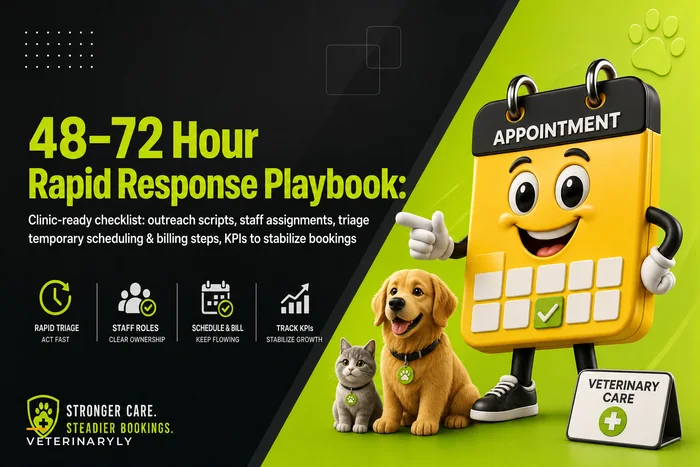
A pragmatic, step‑by‑step 48–72 hour plan clinics can implement immediately after a sudden spike in no‑shows/cancellations. Covers rapid backlog triage and risk stratification, temporary scheduling-rule changes, targeted outreach scripts (phone/SMS/email), short‑term billing and revenue actions, staff roles and shift changes, and a compact dashboard of KPIs to measure impact and stabilize cash flow within three days.

VetPartners’ onboarding chapter establishes that onboarding should include role-specific training, SOP review, technology training, mentorship, assessments, milestones, and feedback across one to three months. The supplied page also links to basic receptionist and veterinary-assistant onboarding examples. However, the supplied evidence does not show a separate, role-based competency sign-off and readiness-to-work-independently tool that managers can adapt across those roles. A new asset is justified only as a clearly differentiated implementation supplement, not as a replacement for the guide’s existing onboarding materials.
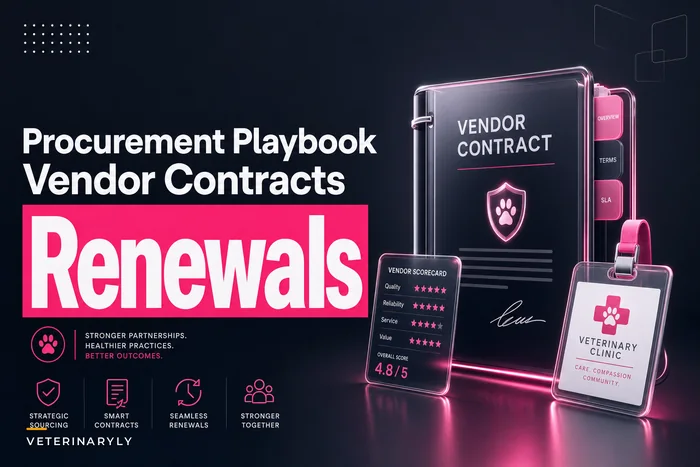
Procurement playbook: RFP template, vendor scorecard, contract clauses to require SLAs/penalties, central renewal calendar and approval thresholds with sample clauses.
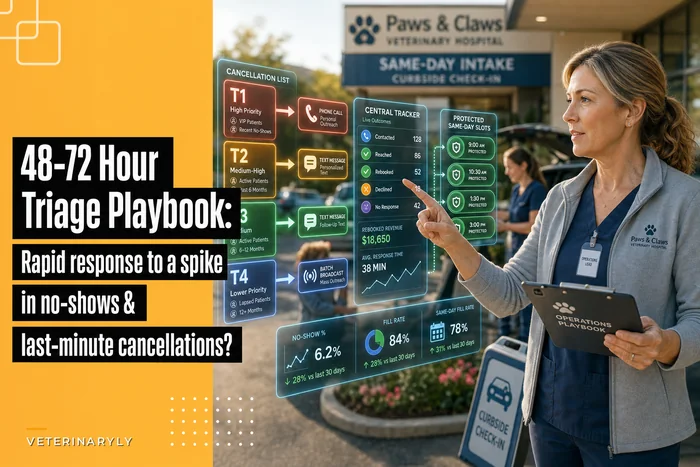
A focused, step‑by‑step 48–72 hour operational plan that clinic leaders can execute immediately when experiencing a sudden spike in no‑shows and last‑minute cancellations. The article will be an evergreen playbook (separate from any time‑bound/current_event pages) and include: an immediate 0–12 hour stabilization checklist (communications, staffing reassignments, same‑day/urgent lists), a 12–48 hour triage and rescheduling protocol that prioritizes high‑risk and revenue‑critical patients, scheduling‑rule adjustments (overbooking, protected blocks, telehealth conversions), short‑term cash‑flow tactics (deposits/guarantees, targeted outreach for unpaid balances, quick-pay offers), and 48–72 hour follow‑up to stabilize operations and measure impact. The piece will include copy‑and‑paste phone/voicemail/text/email scripts, an auto‑message cadence, sample scheduling templates, recommended staffing shifts, and a compact KPI dashboard (no‑show rate, fill rate, contact rate, same‑day utilization, revenue recovered, AR days impacted) with targets and reporting cadence.
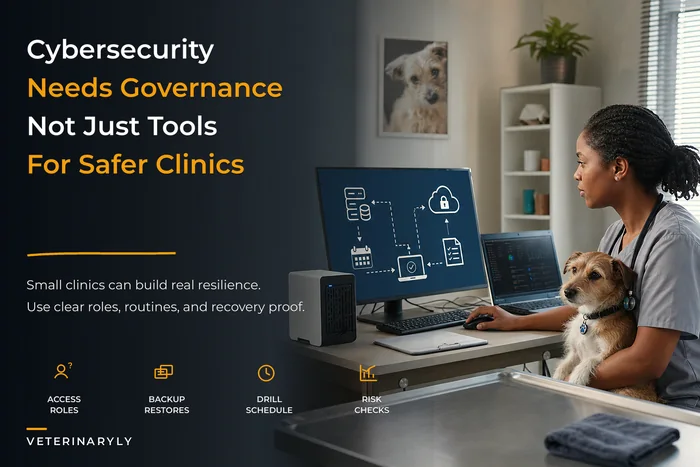
Clinic‑tailored operational security playbook: role‑based access, audit‑log cadence, backup/restore SOPs, tabletop incident drills, vendor‑checklist and phishing‑training templates for small clinics.
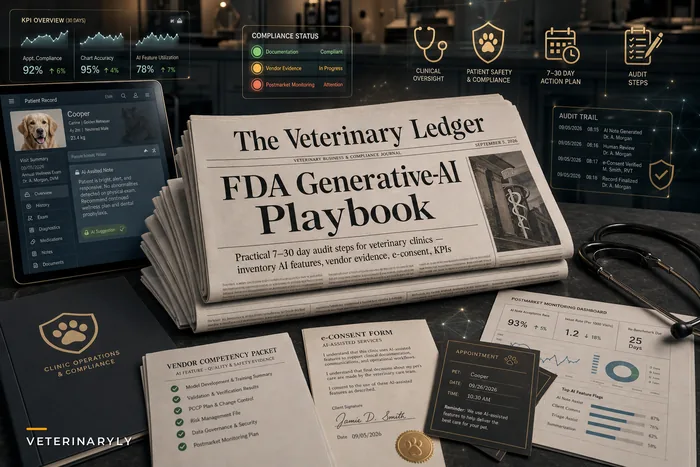
Summarize the FDA discussion paper and translate its key operational implications into a short, clinic‑focused checklist: inventory AI features, require vendor competency evidence and PCCP/change‑control language, update e‑consent and teletriage scripts, implement postmarket monitoring KPIs and periodic re‑benchmarking, and adapt data‑governance and audit trails so EMR records support regulatory review.

Vendor SLA scorecards, incoming‑data validation checks, exception‑routing templates and monthly vendor‑performance dashboards with sample KPIs and corrective‑action forms.
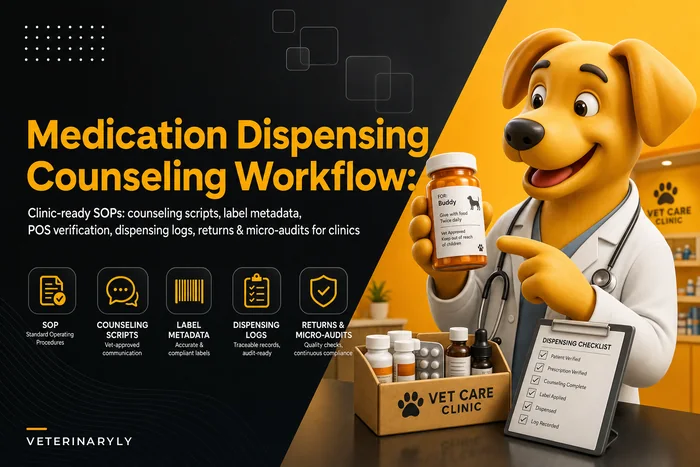
End‑to‑end client‑dispensing workflow: counseling scripts, mandatory label metadata, POS checks, dispensing logs and returns/disposal SOPs with templates and micro‑audit checks.